Tenerife changes its skin every few kilometers. You descend from a viewpoint and the landscape is already different: where there was black lava before, now there is pine forest; where there were fisherman’s houses before, now there are balconies of carved wood. That is the best way to understand the island: not from Teide downwards, but village by village, slowly ascending from the sea to 1,500 meters above sea level.
In this guide we visit the most beautiful towns of Tenerife: the colonial ones, the coastal ones, the ones hidden among ravines, and one that almost never appears where it should: Vilaflor, the highest town in the Canary Islands, where you can literally sleep among pine trees and stars.
Why Tenerife hides some of the most beautiful towns in the Canary Islands
The key is the relief. Tenerife has such different microclimates that in less than an hour’s drive you can go from a black sand beach to a mountain pine forest with low fog. That variety of landscapes—volcanic, tropical, colonial, rural—is what has allowed each town to develop its own identity, without resembling the one next door.
That’s why a route through towns is not just cultural tourism: it is the most honest way to experience the complete island, from sea level to the roof of Spain.
Historic and colonial towns
La Laguna, the old town declared a World Heritage Site
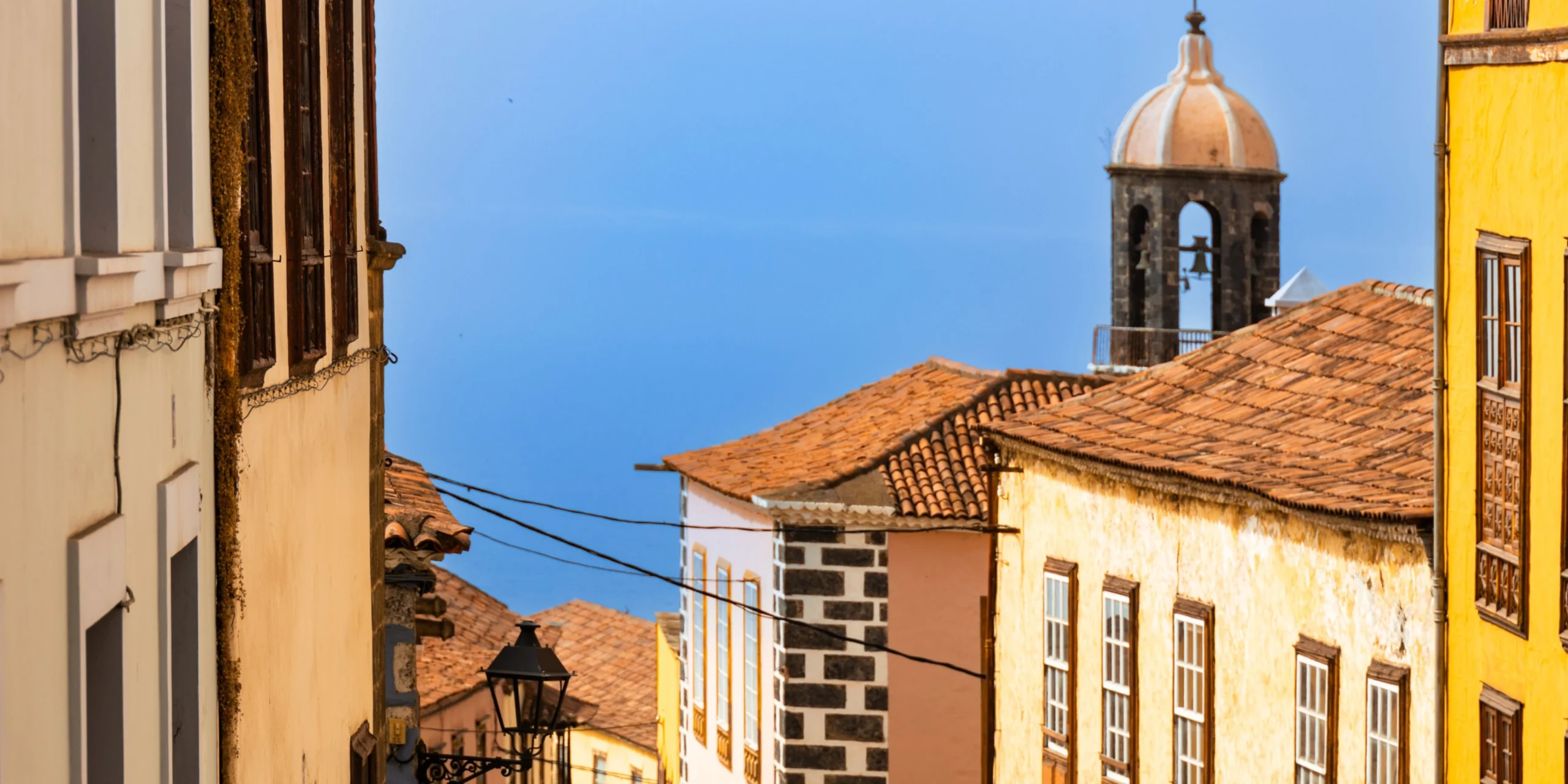
San Cristóbal de La Laguna was the first capital of Tenerife and still preserves its 16th century layout almost intact. Walking through its pedestrian streets is encountering pastel-colored houses, dark stone churches, and courtyards that still breathe university life. The Mirador de la Jardina, on the outskirts, offers one of the best views over the valley.
La Orotava, wooden balconies and centuries-old gardens
Few towns concentrate as much Canarian craftsmanship as La Orotava. Its cobbled streets wind up between houses with carved wooden balconies, and the Casa de los Balcones is a must-visit. If the weather permits, the Victoria Gardens are the best place to sit for a while and let the valley do the rest.
Icod de los Vinos, the town of the millennium-old dragon tree
Icod revolves around a tree: the Millennium Drago Tree, with almost a thousand years of history and a symbol of the island. But the town has much more to offer, from wineries where you can taste malvasia wine to narrow alleys that still retain the aroma of Guanche tradition.
Coastal towns with character
Garachico, the town that rose from the lava
In 1706, a volcanic eruption buried the island’s most important port. From that lava flow later emerged the natural pools of El Caletón, now one of the most photographed spots in Tenerife. The historic center, with its stone mansions and the San Miguel Fortress, still stands as a witness to that history.
Puerto de la Cruz, the Atlantic balcony of the north
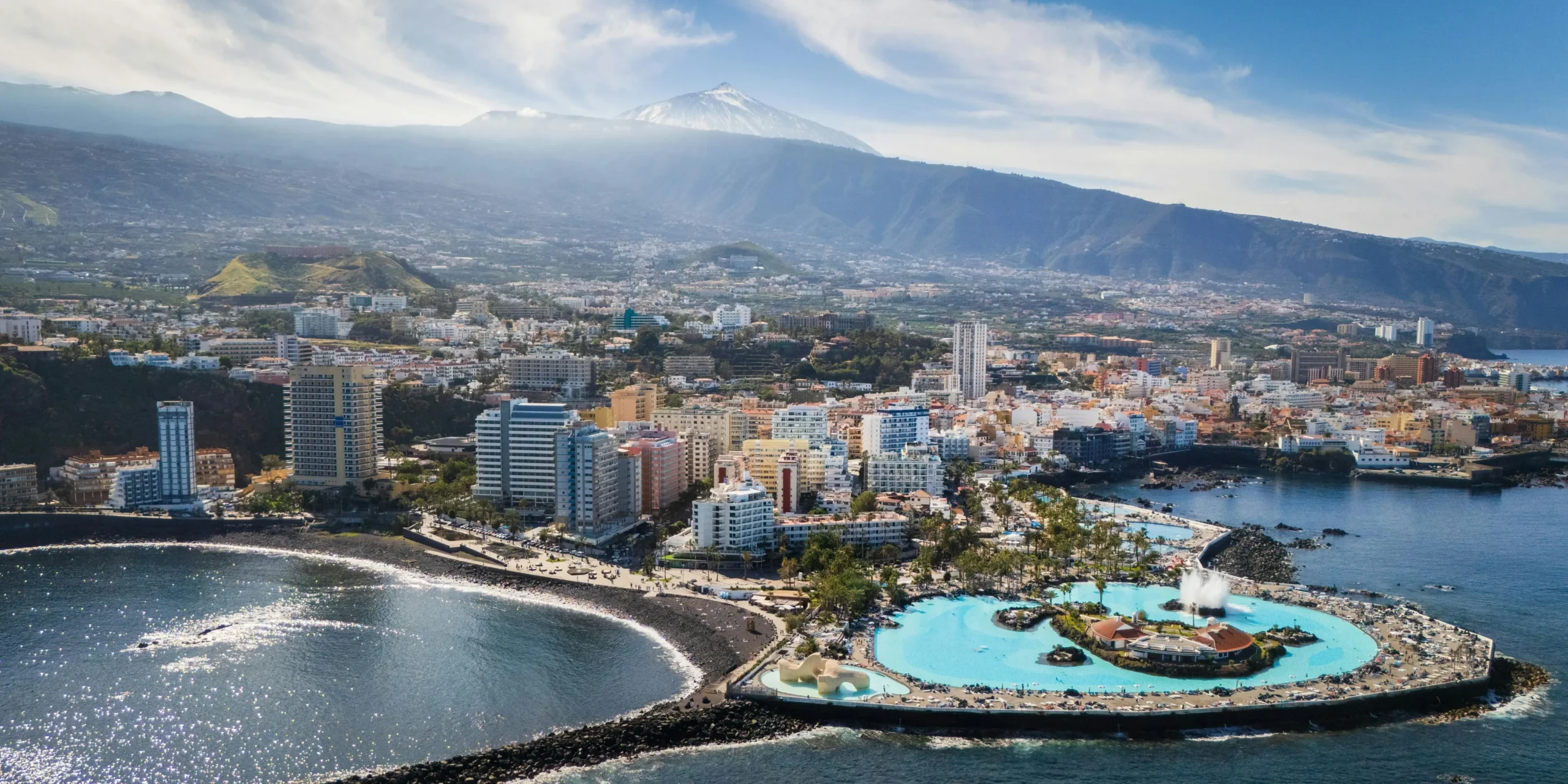
Puerto de la Cruz grew thanks to the maritime trade of La Orotava and today is one of the liveliest towns in the north. The Lago Martiánez, designed by César Manrique, is its great hallmark: saltwater pools, gardens, and artificial islands facing the Atlantic.
Vilaflor de Chasna, the town that touches the sky
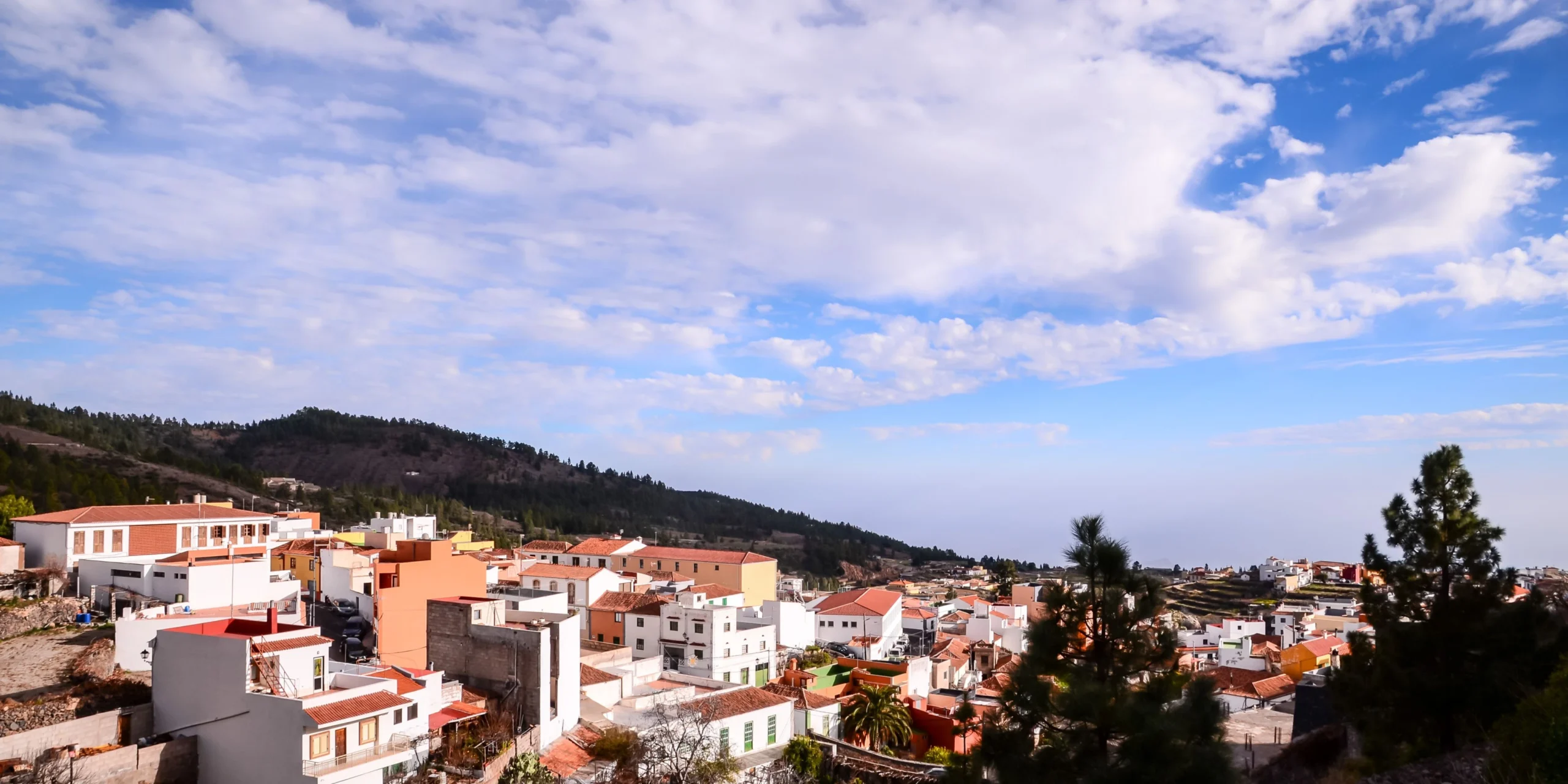
If there is a town that should be at the top of any route and almost never is, that is Vilaflor. Hanging at about 1,400 meters above sea level, in the heart of the Corona Forestal Natural Park, it is the highest town in the Canary Islands and one of the highest in Spain. Here the air already smells different: of Canarian pine, volcanic rock, silence.
What makes Vilaflor special
Vilaflor does not seek to impress with monuments, but with something more difficult to manufacture: human scale and unspoiled nature. Its narrow streets, stone houses, and flowery squares retain the pulse of one of the first towns founded by settlers on the island. And around it, the landscape changes abruptly: pine forests give way to volcanic badlands on the way to Teide.
It is about 15 kilometers by road from the Teide National Park (in fact, part of its municipal area is within the Park itself), making it the perfect base for those who want to climb to the park without leaving the mountain. And due to its altitude and its usually clear sky, it is also a great starting point for star gazing: Tenerife’s peaks, a few kilometers away, are certified as a Starlight Reserve, and the island’s skies have been protected by the Night Sky Law since 1988, placing them among the best in the world for astronomy.
What to see and do in Vilaflor and its surroundings
- Hiking among pine forests, with routes that connect directly to the paths of the Teide National Park.
- Mountain biking, thanks to roads and trails ideal for combining sports and scenery.
- Stargazing, in one of the areas with the least light pollution on the island.
- Wellness and disconnection, taking advantage of the high-altitude climate and the surroundings of the Corona Forestal to truly slow down.
Where to stay to truly experience Vilaflor
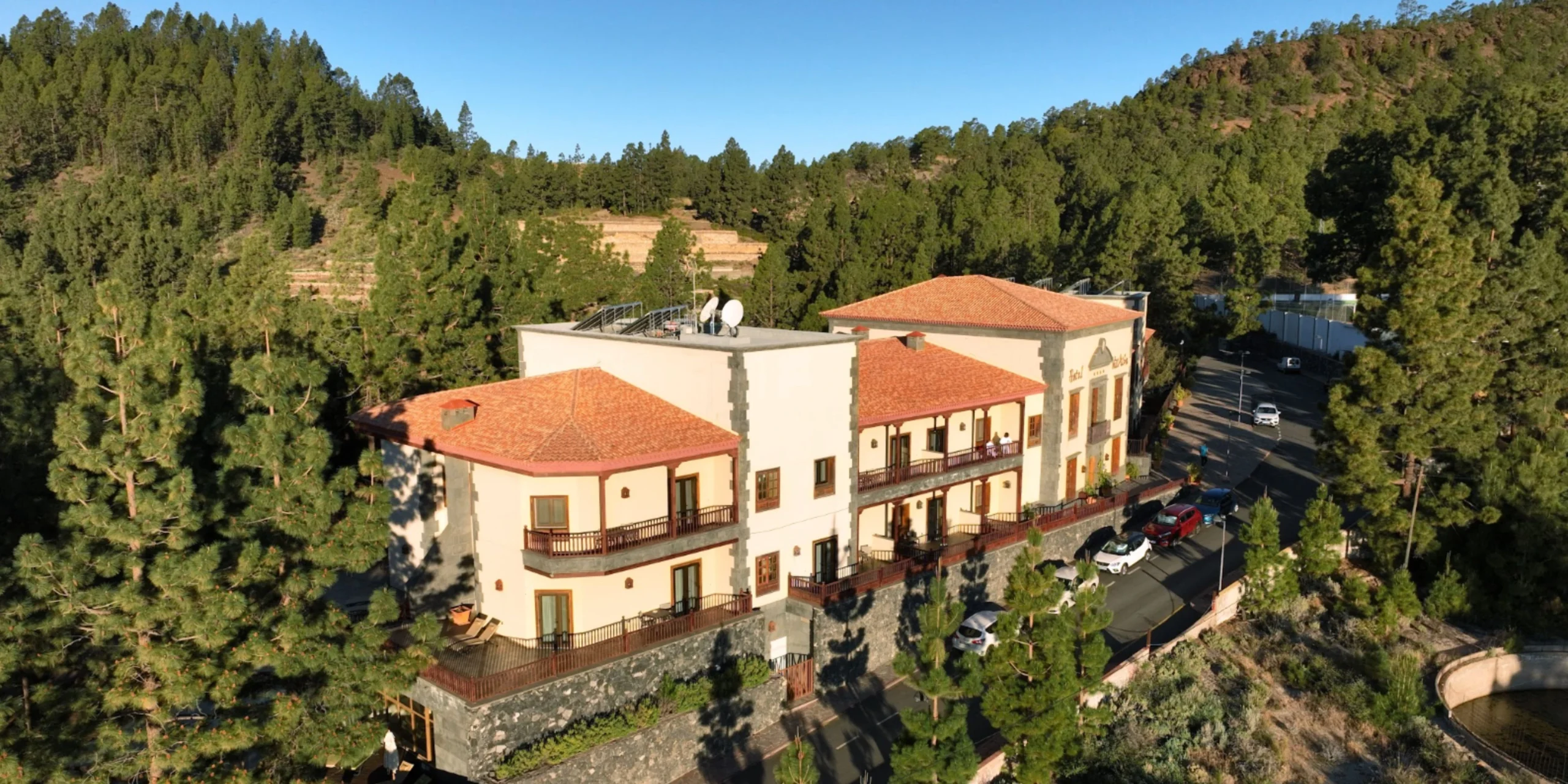
Most routes through the towns of Tenerife treat Vilaflor as a quick stop of twenty minutes. But staying overnight here completely changes the experience: at dusk, when the cars leave and the town regains its silence, that is when Vilaflor is fully understood.
At Hotel Spa Villalba, between the sea and the sky of Tenerife, Canarian colonial architecture merges with the stone and wood of the surroundings. Its spa is the perfect complement after a day of hiking or mountain biking, and its nights—at 1,500 meters above sea level, far from the coast’s light—invite you to get lost contemplating the stars.
Madca, the hidden town among the mountains
Masca lived for centuries virtually isolated due to its impossible geography: deep ravines, cliffs, and, until the arrival of the road, a single access on foot through the Guanches’ Path. That isolation fueled the popular legend that describes it as a pirate hideaway. Today it is one of the most photographed towns in Tenerife, especially from Cherfe Viewpoint, with views that on clear days reach La Gomera. From the town, there is also a hiking route to Masca Beach, only accessible on foot or by boat.
How to organize your route through the towns of Tenerife
If you have 2 or 3 days, this is a logical way to organize the visit:
- Day 1 – Colonial North: La Laguna → La Orotava → Icod de los Vinos.
- Day 2 – Coast with history: Garachico → Puerto de la Cruz → Masca (if time allows).
- Day 3 – Altitude and disconnection: Vilaflor → surroundings of the Teide National Park, with a night of stargazing included.
Saving Vilaflor for last makes sense: after touring the coast and historic centers, climbing to 1,500 meters and staying overnight is the best way to end the trip with the whole island in memory.
Frequently Asked Questions
What is the most beautiful town in Tenerife?
There is no single answer: La Laguna stands out for its colonial heritage, Garachico for its volcanic history, and Vilaflor for being the highest town in the Canary Islands, surrounded by pine forests and at the gates of the Tenerife peaks, certified as a Starlight Reserve.
What is the highest town in Tenerife?
Vilaflor de Chasna, located at about 1,400-1,500 meters above sea level in the Corona Forestal Natural Park, is the highest town in Tenerife and in all of the Canary Islands.
When is the best time to visit the mountain towns of Tenerife?
Spring and autumn offer mild temperatures and clear skies, ideal for hiking. For stargazing in Vilaflor, winter nights with dry air usually offer the clearest visibility.
Experience Tenerife from the heights
After touring colonial towns, volcanic coasts, and villages hidden among mountains, there is only one step left: climb up where the air truly changes. At Hotel Spa Villalba, in the heart of Vilaflor, the other side of Tenerife awaits you: the one lived in silence, among pines, spa, and starry skies.
Discover Hotel Spa Villalba and book your mountain getaway.